
How to Check Criminal History in Alleghany County
Begin with the event, not just a name. A filed charge belongs in the North Carolina Judicial Branch eCourts Portal and the Clerk of Superior Court file. A recent custody question belongs with the Alleghany County Detention Center. The arresting agency holds its own incident or arrest report. For a fingerprint-supported review of your own statewide record, use the North Carolina State Bureau of Investigation Right to Review process. Each channel has a different scope, so one blank result does not cancel information that another custodian may hold.
Gather the full legal name, prior names, date of birth when lawfully available, the approximate event date, and any case or incident number. Confirm that the county is Alleghany in North Carolina because places with similar spellings exist elsewhere. Then work through the sources in a set order:
- Search eCourts Portal for the filed criminal case, using Alleghany as the location and an exact case number when one is known.
- Read the Case Summary and Register of Actions. Match the charge, filing date, case number, and final disposition rather than relying on a result-row name.
- Call the jail or the agency that made the arrest for current custody and public incident information that may not be in the court index.
- Use the courthouse terminal and ask the clerk for the underlying file, a copy, or the certified search that fits the need.
- Request SBI Right to Review when inspecting or correcting your own fingerprint-based North Carolina history.
The official Alleghany County home page links county services and the public-record request channel shown below.
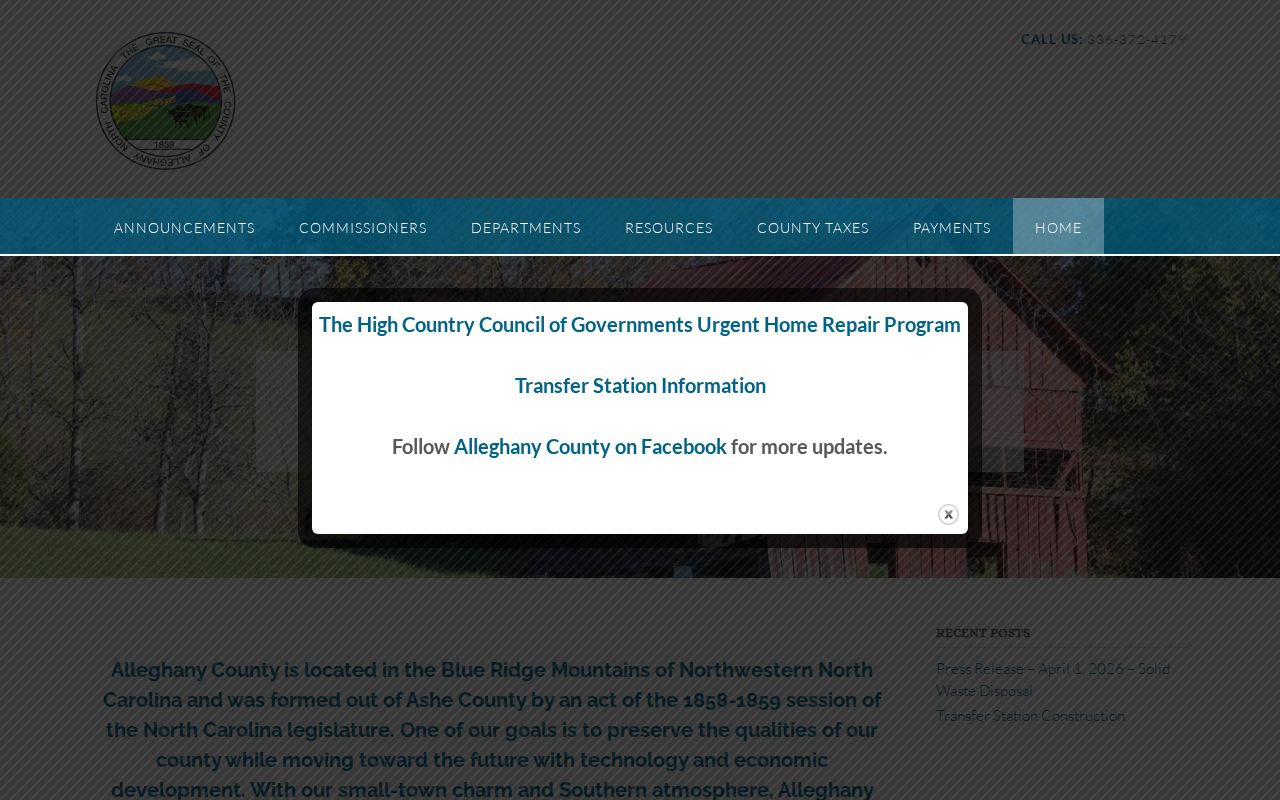
That county channel is useful for county-held records, but a court pleading still belongs with the clerk and a Sparta Police report stays with the town custodian.
Alleghany Court Records After eCourts
Alleghany County joined Enterprise Justice, Odyssey, Portal, and eFiling on July 21, 2025. The change made a statewide public index available for local cases, but it did not erase the clerk's role. Smart Search can take a case number or party name and can filter for location, criminal case type, status, and filing dates. A North Carolina case number uses a year, case-type letters, a six-digit sequence, and a county identifier. Official training permits partial case searches with at least four characters and an asterisk, while name wildcards require at least three last-name letters and one first-name letter before the asterisks.
Portal results can expose case information, parties, assignments, events, hearings, dispositions, and some financial entries. Sealed files, confidential documents, juvenile matters, and unreturned warrants do not appear like ordinary public dockets. Older or nonconverted material may still require a clerk terminal or paper file. CourtDelta, reached from the court page, can help locate an upcoming date, but it does not replace a complete docket or judgment.
| Portal field | Type | How to use it |
|---|---|---|
| Search | Text | Enter a case number or party; use the official wildcard format for partial terms. |
| Location | Multiselect | Choose Alleghany County to keep the result set local. |
| Party criteria | Advanced fields | Add a party name and date of birth where the public form permits. |
| Case type and status | Filters | Select Criminal Actions and narrow open or disposed matters as offered. |
| Filing date range | Date range | Limit results to a known span when a name returns too many cases. |
| Search Hearings | Text and selectors | Search by case, party, attorney, judicial officer, or courtroom for a scheduled appearance. |
Official North Carolina Background Checks
The North Carolina SBI Criminal Information and Identification Section is the central repository. It does not offer a public name-search product for checking another person. A person reviewing their own state record submits the current Right to Review form, a full FD-258 fingerprint card taken by local law enforcement, and a $14 certified check or money order. The SBI accepts the request by mail, offers no walk-in or expedited service, and advises allowing up to 20 business days plus mailing time. A separate FBI Identity History Summary serves federal self-review.
Local law-enforcement agencies take rolled cards or Live Scan prints, but North Carolina has no IdentoGO-style public electronic vendor route for an SBI submission. Electronic fingerprint transmissions are limited to criminal-justice agencies. Ask the sheriff or Sparta Police about appointments, identification, cards, and any local rolling cost because neither local page posts a firm schedule or price.
| Official product | Current fee | What it provides |
|---|---|---|
| SBI state Right to Review | $14 per copy | Your fingerprint-supported North Carolina repository record |
| FBI Identity History Summary | $18 direct | Your federal identity-history response |
| Certified clerk search | $25 | Certified court-record search through a clerk |
The SBI personal review instructions shown below set out the official self-review route and fee.
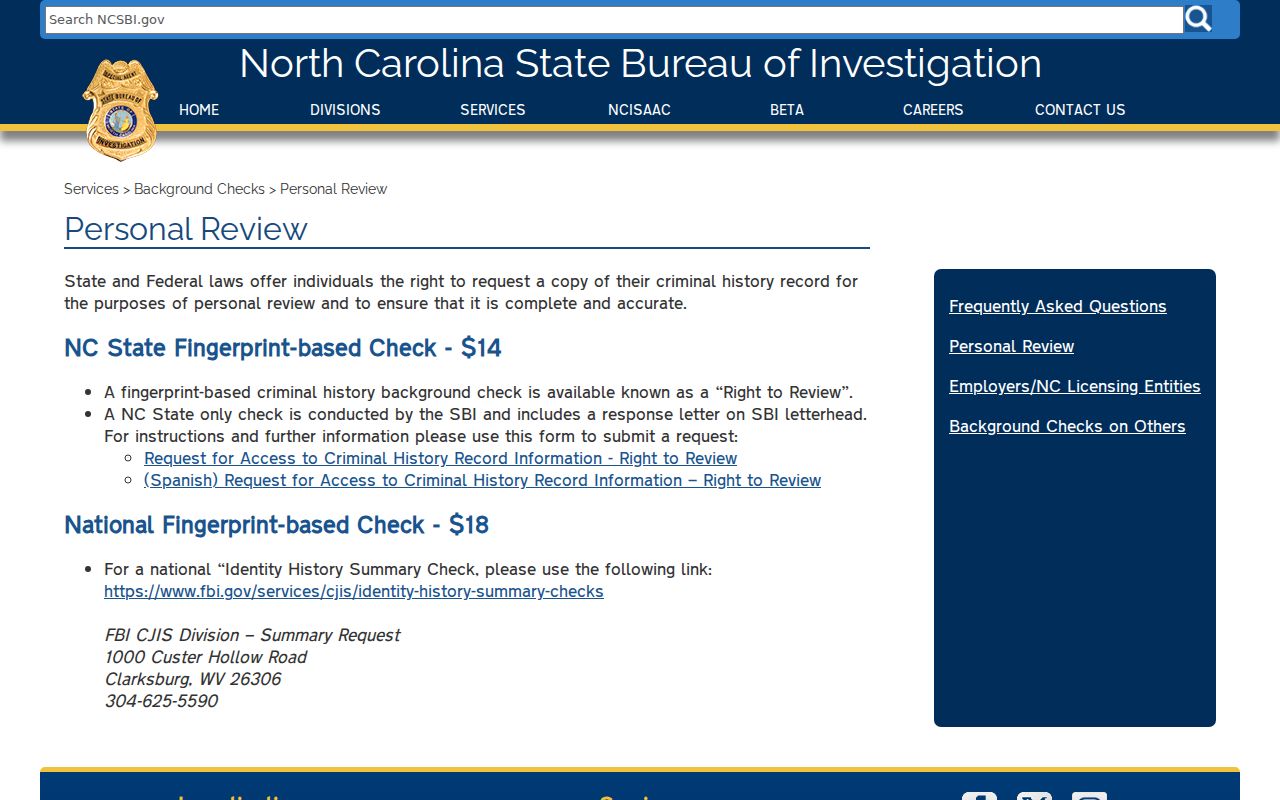
The fingerprint-based response is not the same product as an Alleghany County court-name search.
Alleghany County Jail Record Fallback
Alleghany County publishes no official jail roster, booking search, or arrest blotter. For current or recent local custody, call the Alleghany Law Enforcement Center and Detention Center at 336-372-4455 with a full name and approximate booking date. The facility is at 40 Alleghany Street in Sparta and receives mail at P.O. Box 53. The sheriff page says the operation is staffed around the clock, though routine business is best handled on weekdays. Call before appearing because a separate records-counter schedule and public entrance instructions are not posted.
Use a narrow Chapter 132 request when an existing booking record is not routinely provided. NCDAC Offender Search serves a different layer: prison, probation, parole, post-release supervision, releases, absconders, and related state correction data. It cannot establish whether someone entered the Alleghany jail today. NC SAVAN and VINELink add custody-status notification, but neither is proof of a complete county roster.
NCDAC search fields include name, offender number, status, age, and descriptors. Use those filters only after separating state custody or supervision from a county booking question.
Types of Criminal Records
A single incident can create related records at several offices. The arresting deputy, Sparta officer, trooper, or other agent writes the agency report. The county jail creates intake and custody material. A magistrate handles initial process and release conditions. Once a charge is filed, the Clerk of Superior Court creates the District or Superior Court case. Fingerprints can begin an SBI arrest cycle, and the clerk later reports the disposition. A state custody or supervision entry may follow a sentence.
- Incident or arrest report: event facts, alleged offenses, agency details, and public arrest circumstances, subject to investigation limits.
- Booking record: intake date, initial charge, identifiers, bond or hold, and release data kept by the jail.
- Court file: filed charges, docket events, hearings, pleas, motions, judgment, sentence, and financial entries.
- SBI criminal history: fingerprint-linked arrest cycles and reported outcomes from across North Carolina.
- Custody, warrant, and registry records: separate official products with narrower purposes and access rules.
These distinctions prevent a common error. Booking establishes custody, not guilt. Portal shows a public court case, not a complete SBI identity record. The registry covers qualifying offenses and duties, not every criminal event. North Carolina labels felonies from Class A through I and misdemeanors as A1, 1, 2, or 3; the judgment and offense-date law control the class, while prior-record levels help shape sentencing. For the court's filed charge and final result, use the dedicated Alleghany County criminal court case records path.
The SBI fingerprinting information is the source for the official channels and charges pictured below.
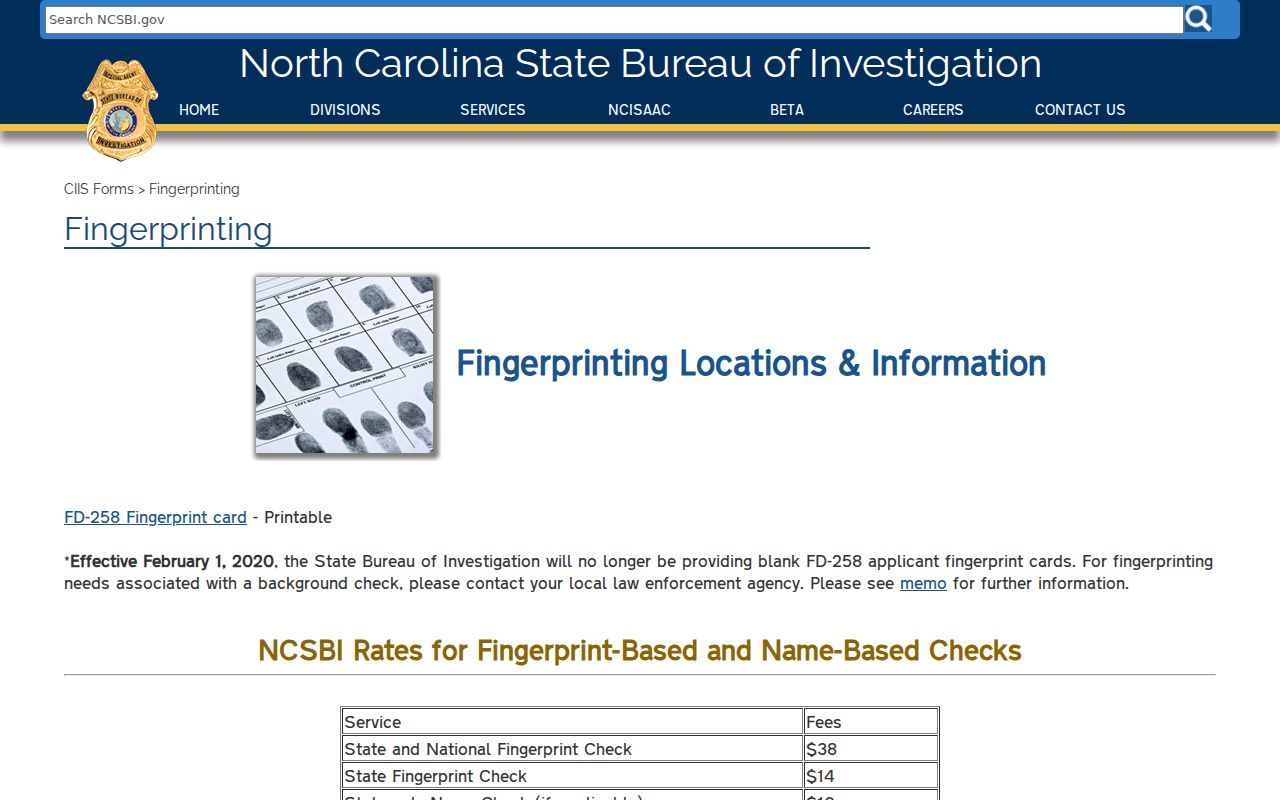
It confirms why a mailed fingerprint card, not a commercial electronic name search, is the correct route for personal repository review.
Alleghany County Public Records Form
The county's signed request form is the fallback for identifiable county-held records. It may be delivered in person, emailed to recordsrequest@alleghanycounty-nc.gov, or mailed to Alleghany County Records Request, P.O. Box 366, Sparta, NC 28675. A requester can type into the form, but the instructions require a physical signature. The form asks for contact information, the department holding the record, whether the request is from media, the preferred delivery method, and a focused description.
Name an existing item and a date range. A request for a final incident report with an event date, place, and case number gives the custodian more to work with than a demand for everything about a person. Send Sparta Police reports to Sparta Police, court papers to the clerk, and sheriff or jail material to the county custodian. Chapter 132 does not require an office to create a new compilation. The form posts no set charge or deadline, so ask for a cost estimate before copies are made.
- Inspection
- Review of an available public record at reasonable times, subject to lawful limits.
- Actual cost
- The reproduction cost allowed by law, not an invented flat fee.
- Redaction
- Removal of protected data while releasable parts of a record remain available.
- Custodian
- The office that made or keeps the specific record being requested.
What an Alleghany County Criminal Record Shows
The contents depend on which record is open. An SBI rap sheet groups fingerprint-supported events by identity and arrest cycle. A court file centers on a case, its parties, filed charges, hearings, court actions, and result. A booking record centers on intake, custody, bond, and release. Public views may omit Social Security numbers, protected identifiers, victim or minor details, medical data, sealed documents, and confidential investigation material.
| Name and Identifiers | Legal name, aliases, birth details, and SBI or FBI number where the official product permits them. |
|---|---|
| Arrest and Booking Data | Arrest date, agency, initial charges, booking identifier, custody status, bond or hold, and release information. |
| Charges and Statutes | The allegation at arrest and the charge later filed by the prosecutor or court, which may differ. |
| Disposition | Conviction, dismissal, acquittal, nolle prosequi, or another recorded outcome for each charge. |
| Sentence | Custody, probation, fines, costs, restitution, or other terms entered in the judgment. |
| Custody or Supervision | Prison, probation, parole, or post-release data when held in the relevant NCDAC record. |
A name match alone is weak proof. Compare the case number, date, charge, jurisdiction, and disposition. Only fingerprint comparison can establish identity with the reliability described by the SBI.
The SBI forms directory provides the current Right to Review and record-correction documents displayed below.
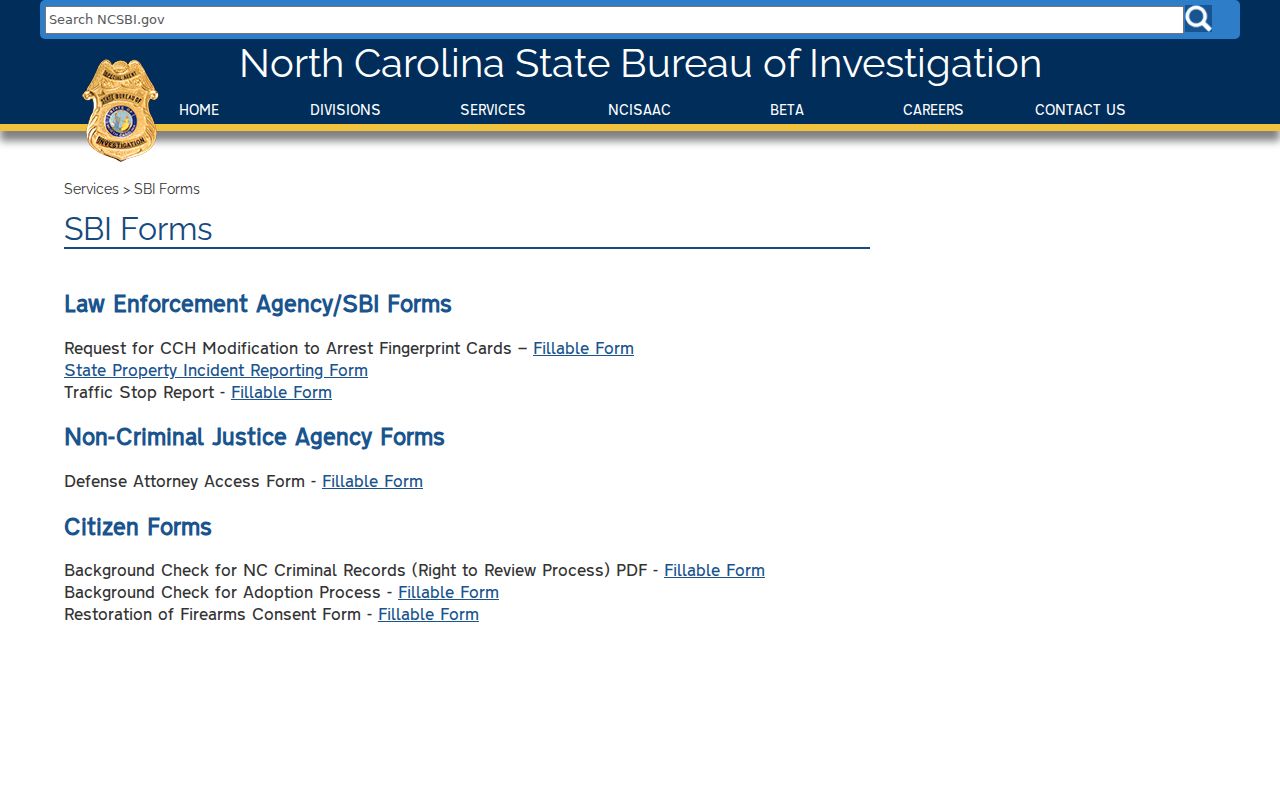
Using the current form matters because identifiers, mailing directions, and certification language can change.
Alleghany Custody and Supervision Records
Three tools answer three separate questions. The Alleghany County jail answers whether someone is in present local or pretrial custody. NCDAC Offender Search reports eligible state prison and community-supervision history. NC SAVAN supplies notifications. A person can have a local booking that never becomes an NCDAC prison entry, or a past state supervision record without being in the county jail now.
North Carolina runs probation, parole, and post-release supervision at the state level. Alleghany belongs to Community Supervision Judicial District 23, while its courts belong to District 34. The differing district numbers refer to separate agency maps. The Post-Release Supervision and Parole Commission makes covered release decisions, and NCDAC Community Supervision carries out field supervision. Violation activity can lead to a report, hearing, new conditions, confinement, or revocation, but an absconder or order for arrest is not itself a new conviction.
Use a court judgment to confirm what the judge ordered and NCDAC to check public supervision status. Detailed officer notes, treatment information, medical data, and risk material are not all public.
Public Access Laws
North Carolina law opens many records while protecting defined categories. The Clerk of Superior Court supervises access to court files. Law-enforcement agencies must release specified incident and arrest facts, yet an active criminal investigation file is not automatically public in full. Custodians may redact protected information rather than deny every part. Ask for the legal basis when material is withheld and narrow the request to the public fields or a final document.
Key statutes:
N.C.G.S. Chapter 132 defines public records and requires access at reasonable times, subject to exceptions.
N.C.G.S. §7A-109 generally opens court records under clerk supervision and authorizes categories of remote access.
N.C.G.S. §132-1.4 separates public law-enforcement facts from investigation and intelligence information.
N.C.G.S. §15A-502 governs arrest fingerprints, photographs, and transmission into the state criminal-history process.
Juvenile records, medical data, personal identifiers, sealed material, and expunged matters follow stricter rules. Public access also does not permit harassment, threats, identity theft, retaliation, or vigilante acts.
Alleghany and Federal Court Records
Federal criminal cases do not appear in the Alleghany County clerk's state docket. Alleghany lies in the Middle District of North Carolina, and PACER is the official federal docket channel. A federal prison question goes to the Bureau of Prisons locator, while a person's own federal identity review uses the FBI Identity History Summary. These are distinct from county jail, NCDAC, and SBI records.
The Western District of North Carolina page shown below depicts a different federal court layer.
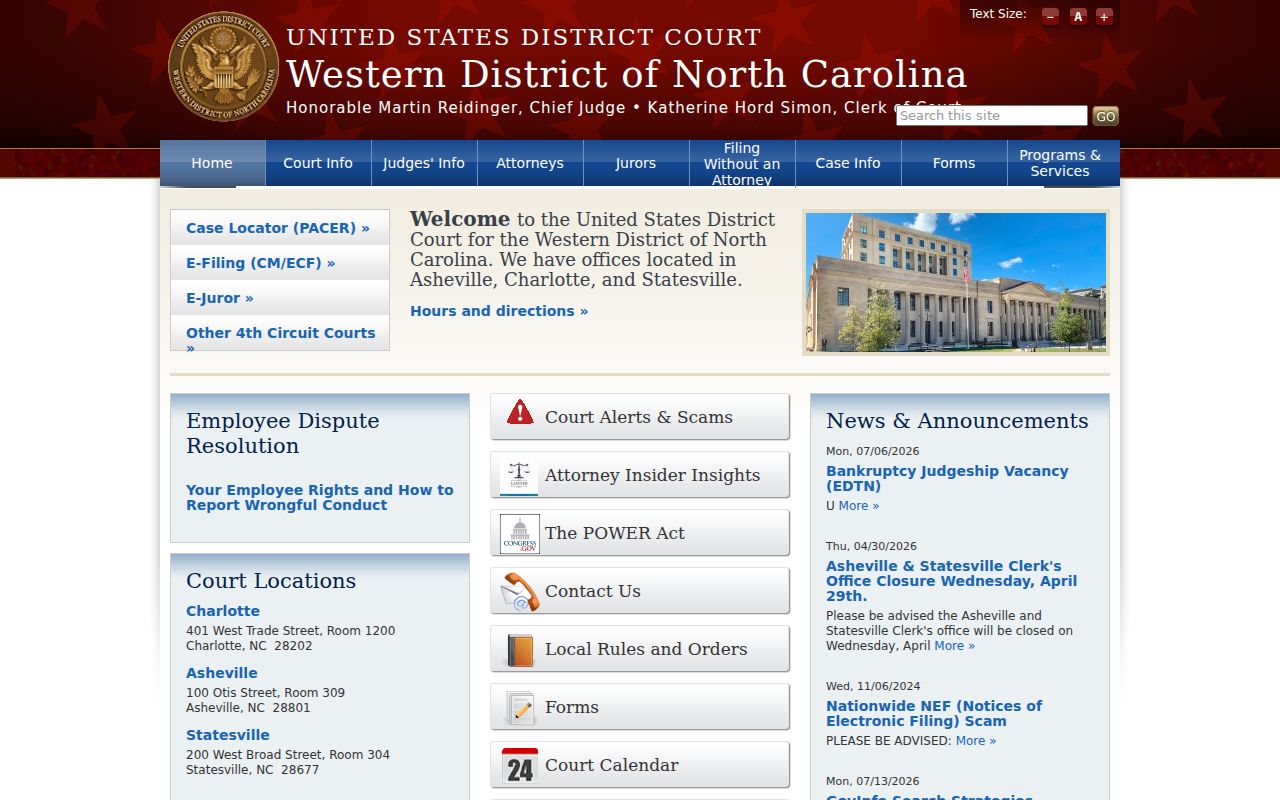
The district distinction matters: use the Middle District and PACER for an Alleghany federal case, not the county clerk or the pictured Western District source.
Alleghany Courthouse Record History
The Alleghany County Courthouse at 12 North Main Street in Sparta is the main public criminal-record building. One Clerk of Superior Court maintains both District and Superior Court files under North Carolina's unified General Court of Justice. The clerk's office is open weekdays from 8:00 a.m. to 5:00 p.m. and can be reached at 336-372-3900. A public terminal searches by defendant, case number, or victim or witness; staff can then retrieve a paper file or make a copy for a fee.
Alleghany County was formed from Ashe County in 1858 and 1859, so research into earlier events may lead to Ashe records. The courthouse dates to 1922 and 1923, later gained National Register recognition, and still anchors a compact records system in the county seat. Digital access changed in 2025, but the physical file remains important for older documents and items not exposed online.
The Judicial Branch courthouse page supplies the official building image and access facts shown below.
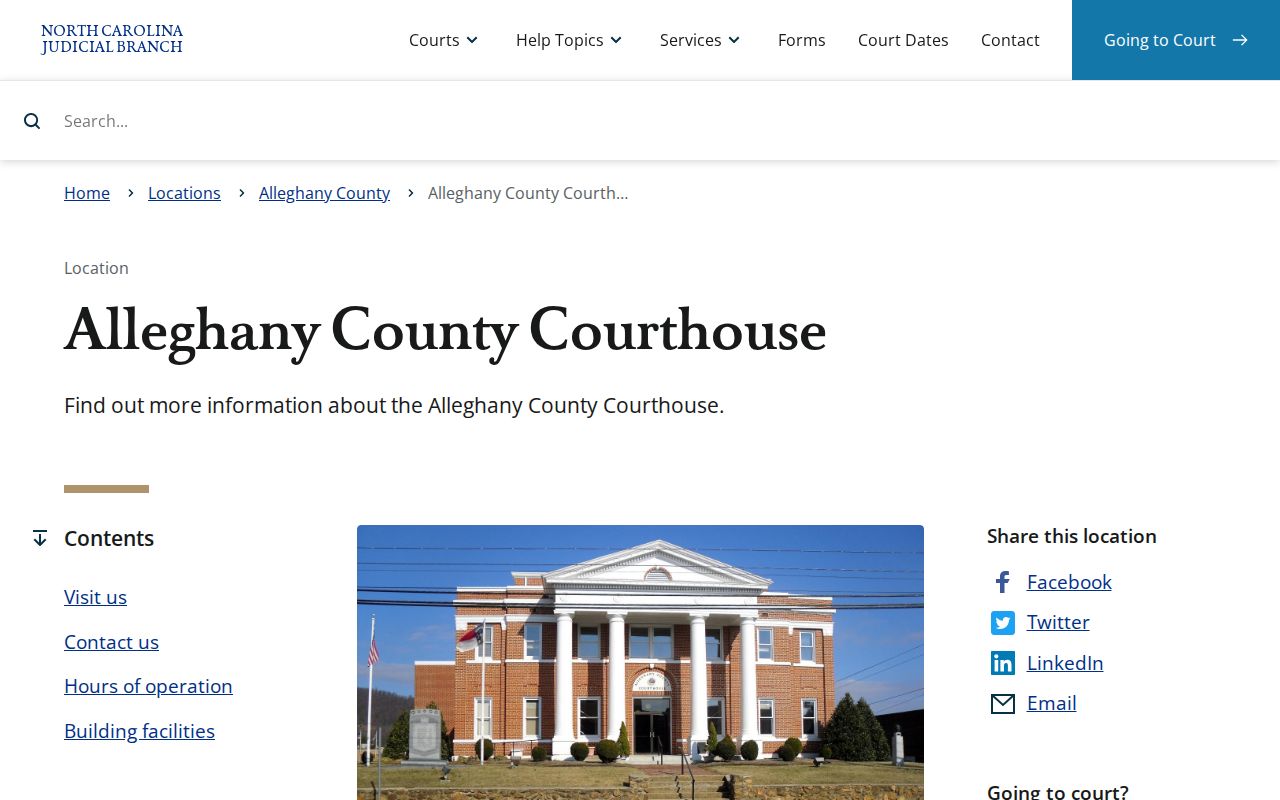
The image ties the online docket back to the clerk counter where the authoritative Alleghany County case file is maintained.
Sealed, Expunged & Restricted
A failed search cannot prove that no record exists. Portal omits sealed or confidential files, juvenile matters, sensitive documents, and some process that has not been returned. Older paper records may not be converted. North Carolina expunction is also statute-specific. Dismissed or not-guilty charges, certain juvenile-age convictions, eligible nonviolent convictions, mistaken identity, and other defined outcomes follow different laws and forms.
Current nonviolent-conviction waiting periods can run three, seven, ten, fifteen, or twenty years depending on the number and type of eligible convictions. The clock often runs from the later of conviction or completion of an active sentence, probation, or post-release supervision. Those headline periods do not override exclusions. Some first-offender routes use different timing and a $175 fee, while dismissal and acquittal routes can have other fee rules. Confirm the statute and current AOC form with the Alleghany clerk before filing.
The North Carolina courts expunction resource shown below explains the state eligibility and filing paths.
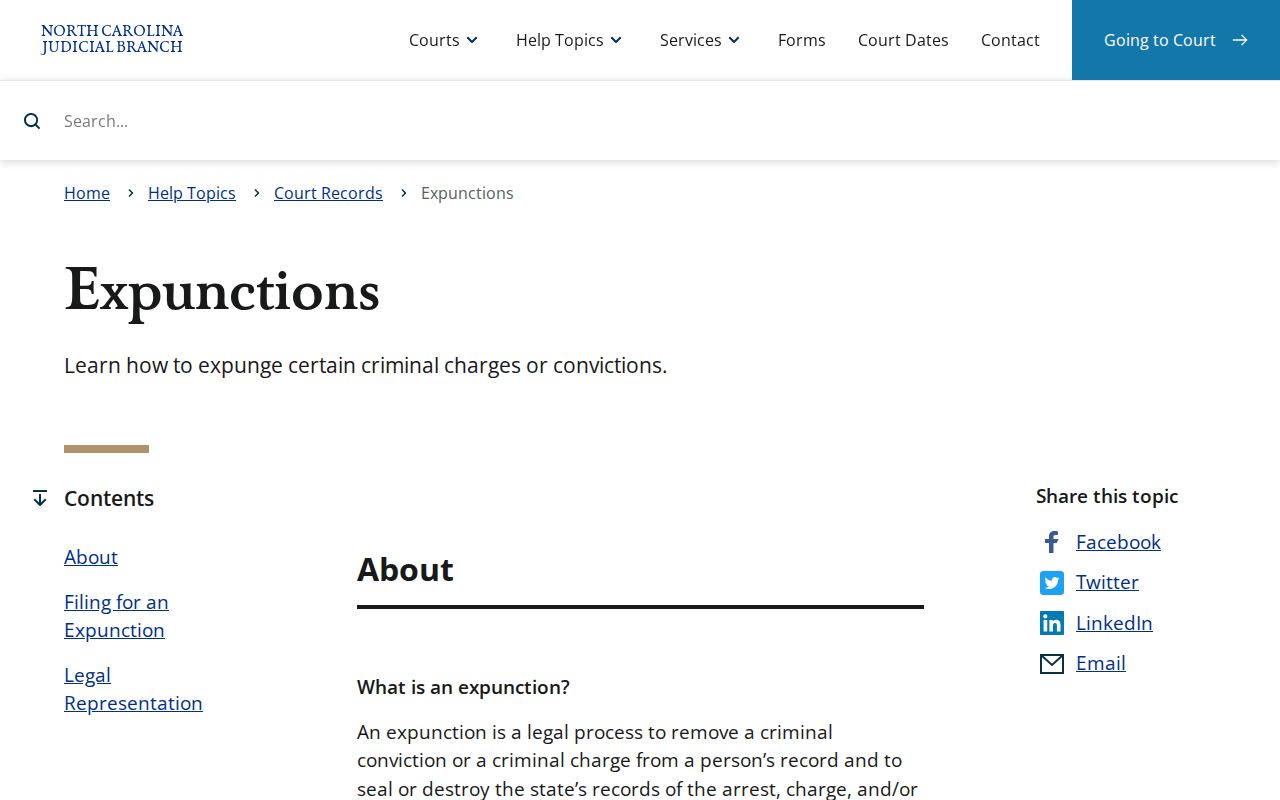
After an order, the clerk sends notices to listed agencies, while limited confidential indexes remain available for uses allowed by law.
Alleghany Warrant Record Checks
There is no official public Alleghany County active-warrant list, name search, most-wanted page, or sheriff app. North Carolina eWarrants is for justice users, not the public. State law also keeps unexecuted arrest and search warrants nonpublic until execution or return, subject to sealing. That is why a blank Portal search cannot clear a possible warrant.
For your own status, call the sheriff at 336-372-4455, contact the clerk at 336-372-3900 when a known case exists, and consult counsel when needed. Ask for the case number, issuing court, charge, bond, and resolution steps if those details are releasable. Follow the issuing court's directions, keep proof after the matter is resolved, and recheck because database updates can lag. North Carolina records may use terms such as arrest warrant, order for arrest, search warrant, or fugitive and extradition process.
Sparta has no municipal court. Town misdemeanors, infractions, failures to appear, and returned criminal process route through Alleghany District Court and the unified clerk.
Criminal Records by City in Alleghany County
Sparta is Alleghany County's only incorporated municipality, so it is the sole city guide. Sparta Police creates town incident, crash, and arrest information, while the sheriff runs the detention center and shares law-enforcement responsibility inside town. Once a citation, summons, warrant return, or charge reaches court, the clerk maintains the judicial copy. The official state population list gives no second or third incorporated city to add.
Sparta Criminal History
Population estimate 1,929 · Police reports remain with the town; criminal cases route to Alleghany District or Superior Court.
The city route is especially useful when an event began with Sparta Police rather than an Alleghany County deputy or state trooper.
Alleghany County Justice Record Context
Official counts need their scope and date attached. The 2025 NCDPS Violence Profile reports 543 NIBRS crimes and 48 violent crimes for 2023. A separate SBI index table shows 111 combined sheriff-area and Sparta index offenses for 2024. The smaller figure is not evidence of a direct fall because the year and offense definitions differ. Neither count describes a named person or predicts the result of a record search.
Juvenile data has its own limits. The 2025 county databook reports seven delinquent complaints, eight total complaints, no Superior Court transfers, no detention or youth-development-center commitments, and 46 youth served through the Juvenile Crime Prevention Council. Active local programs include Alleghany Teen Court and the Youth Justice Project's community service and restitution work. These measures describe workload and prevention, not public adult case files.
The official Alleghany juvenile databook is the source displayed below.
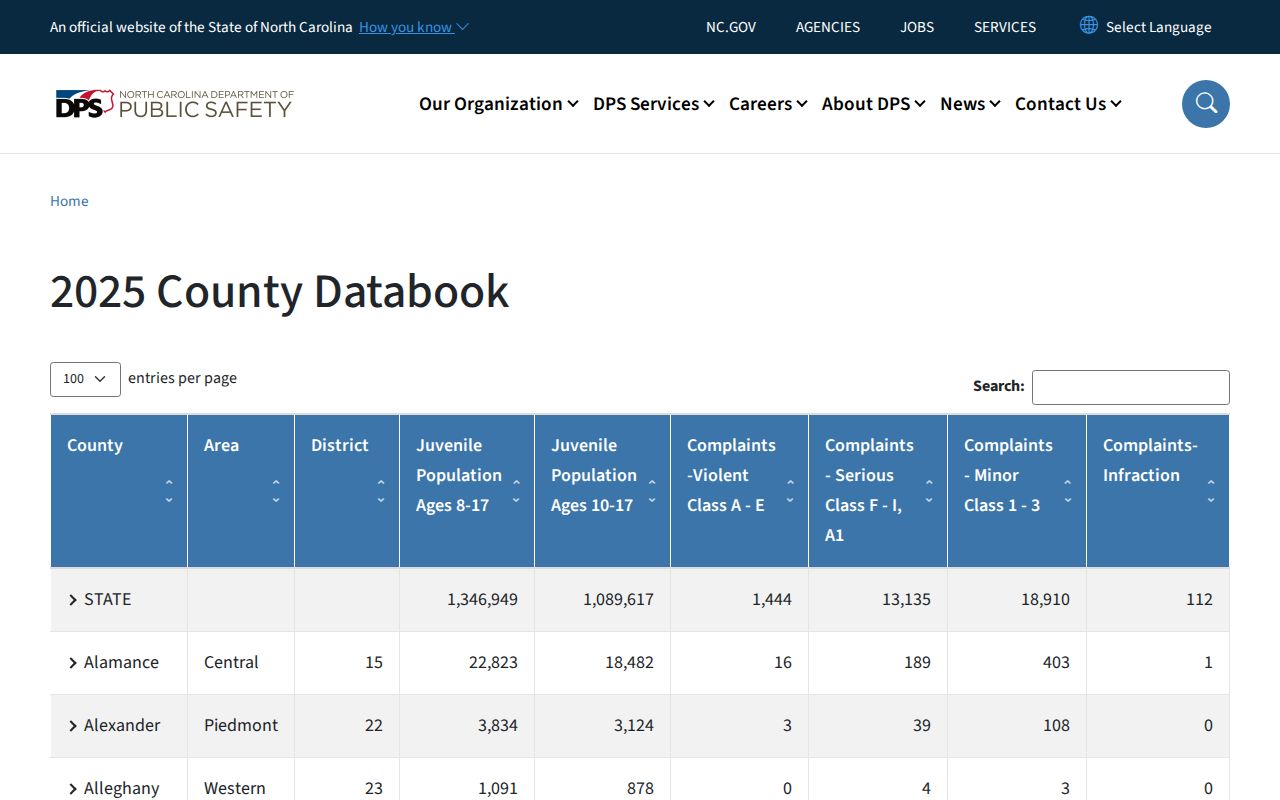
Its small local counts should be read as dated program measures, not as a roster of children or criminal histories.